
Legend Cars: build it before you buy it
Speedway Motorsports wanted buyers to configure a Legend Car online before ordering one. There was no CAD file and no blueprint to start from, so we built the entire line in 3D by hand, part by part. Spin it, swap it, paint it below.
Loading models
Built to be raced
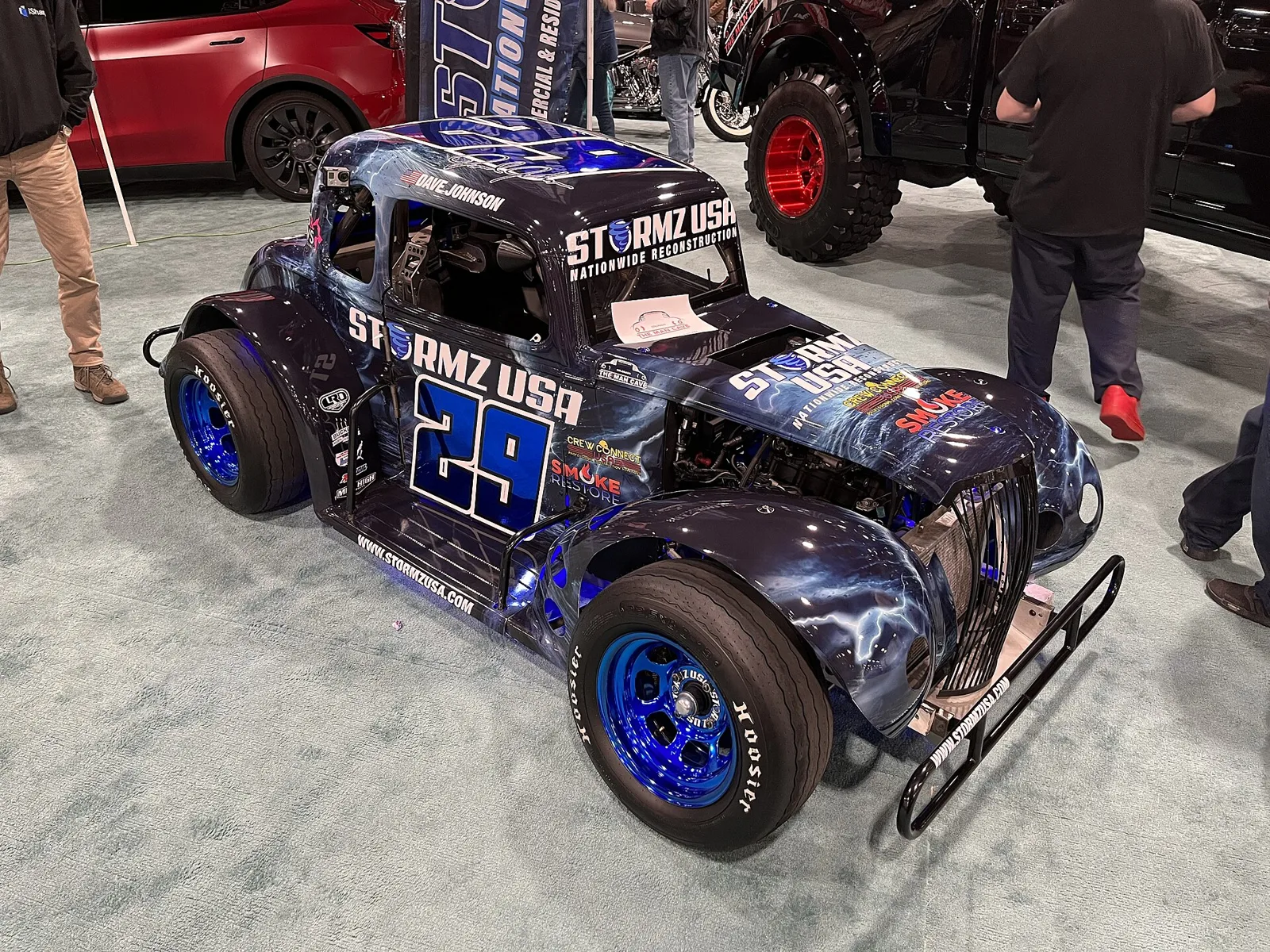
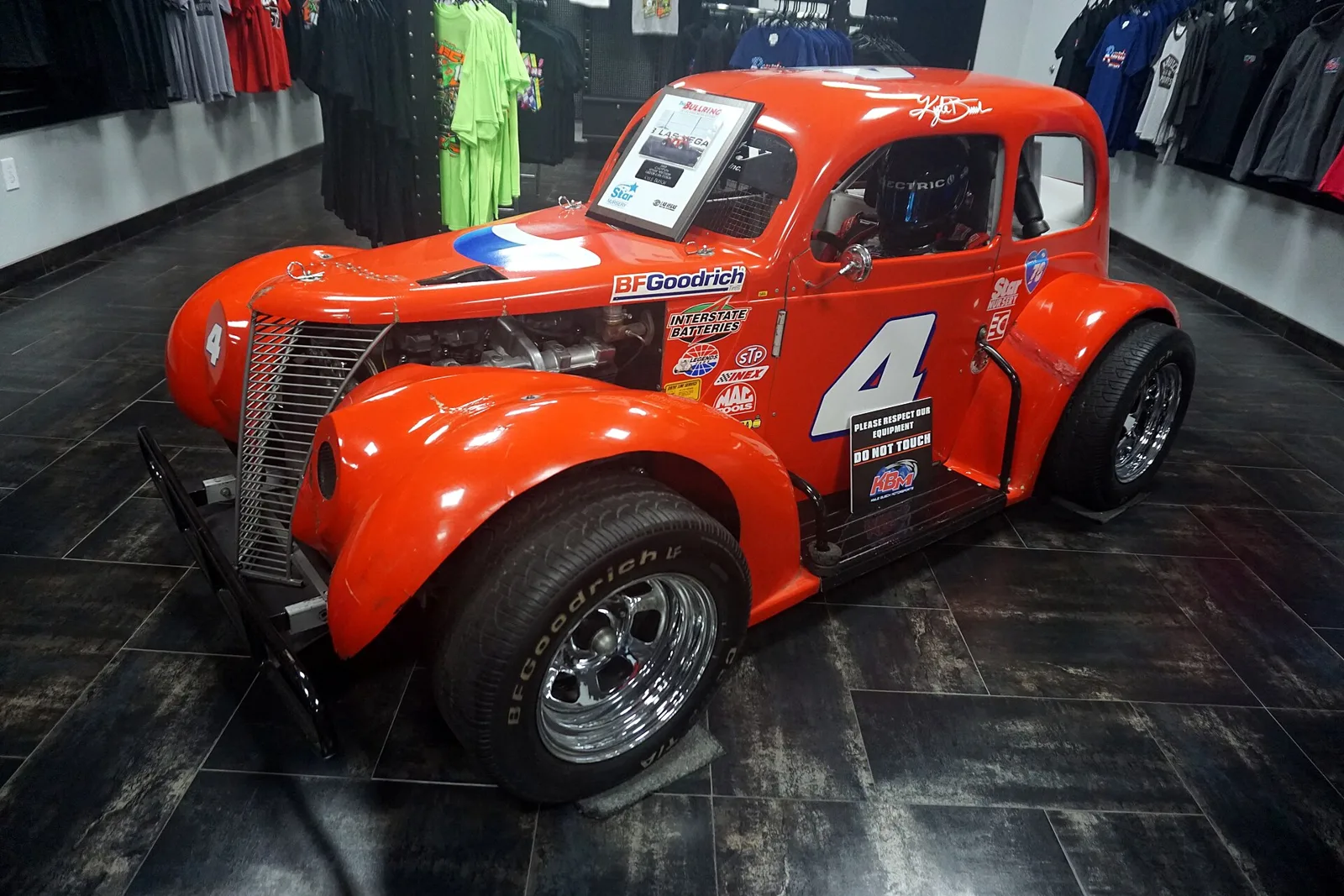
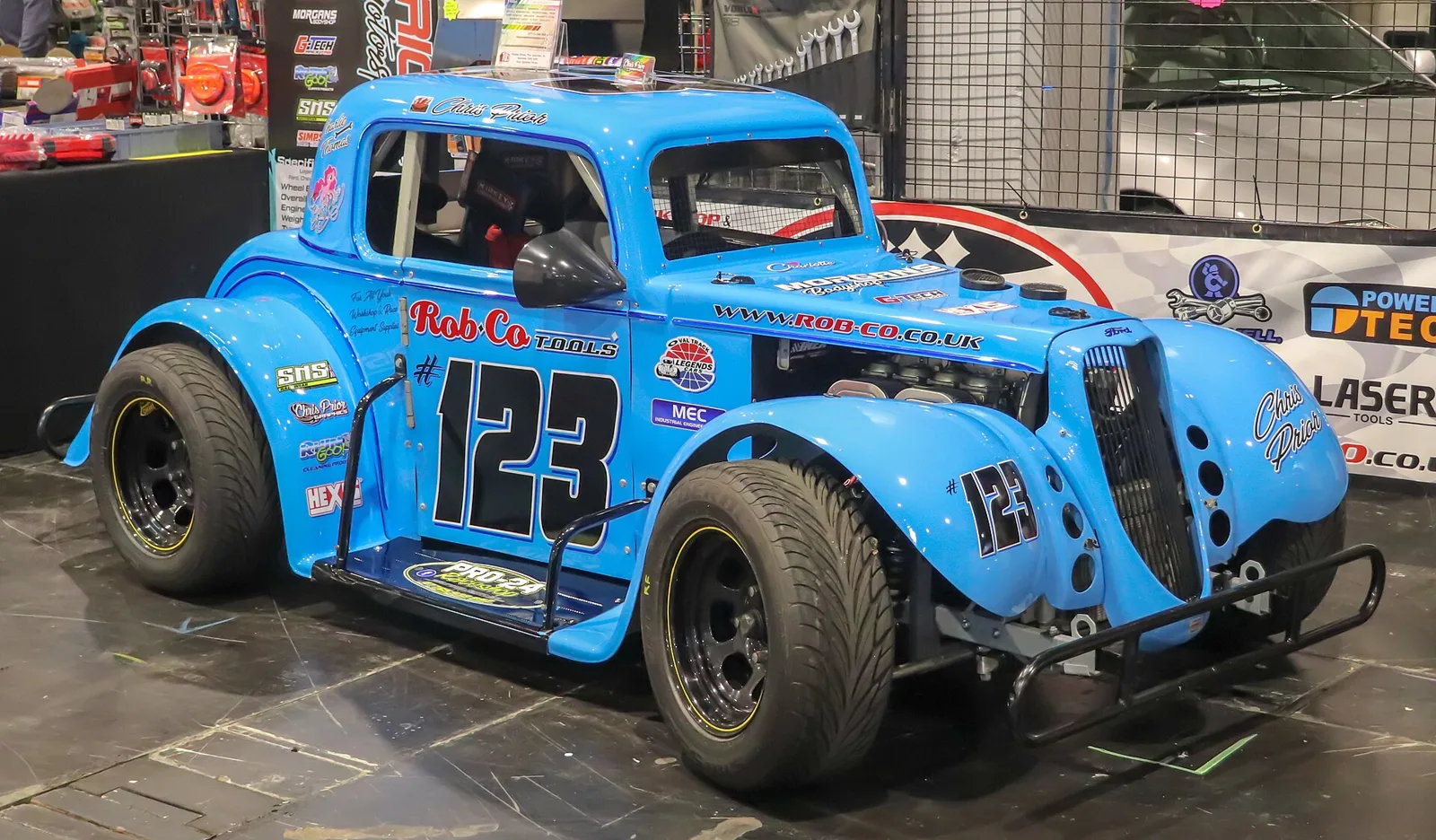
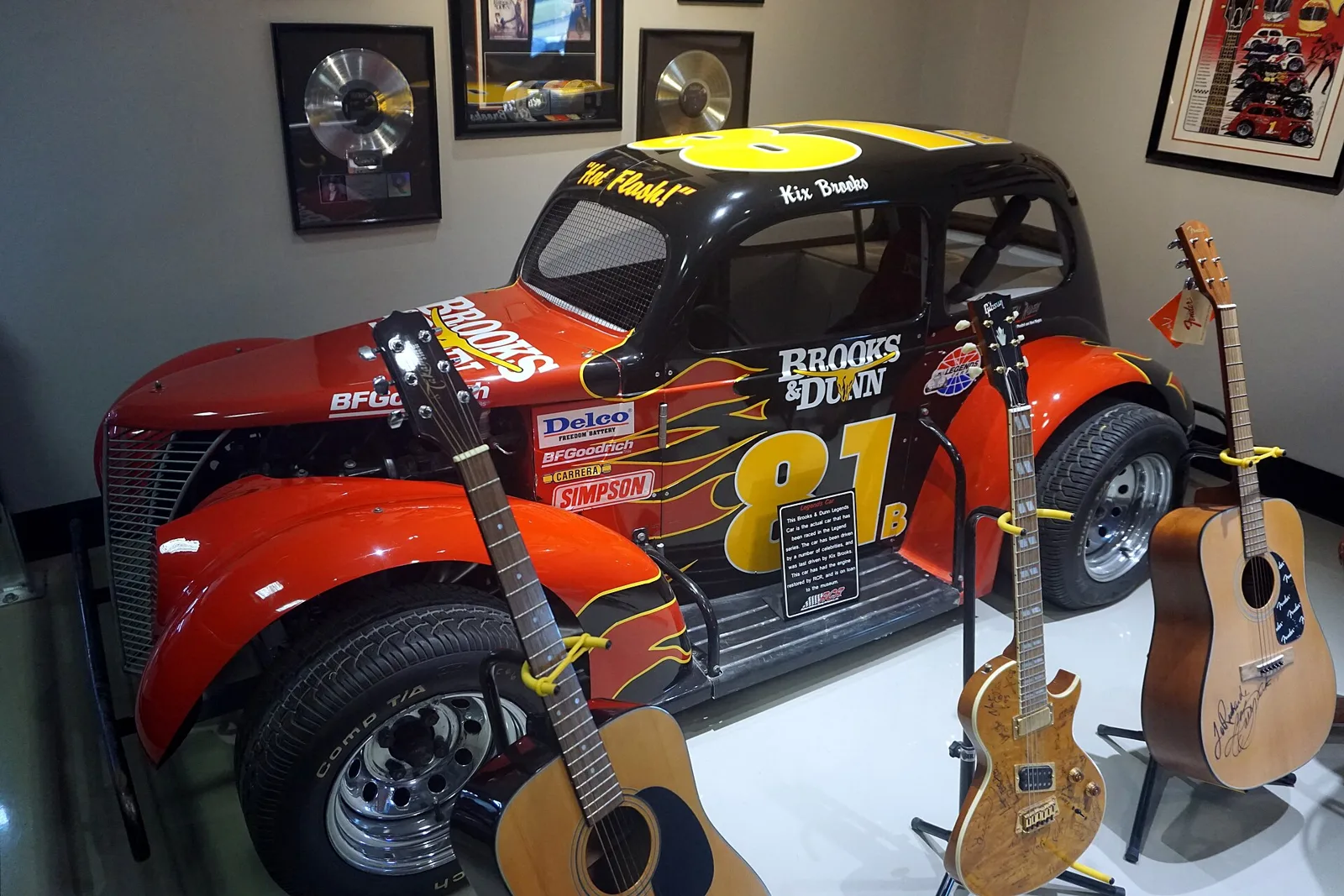
Nobody buys a Legend Car to leave it plain. They get wrapped, numbered and run hard at tracks from Charlotte to Brands Hatch. The builder lets a buyer see that car before it’s theirs.

The project
The challenge
Sell race cars online, where every buyer builds a different one. Every body, front end, rim, tire and exhaust had to exist as an accurate, swappable 3D part, and none of it existed yet: no CAD files, no blueprints, just photos.
What we did
Modeled the full line by hand from studio photos, built as one modular system so any approved part fits any car, then optimized and exported it for the web.
The result
The models power the 3D Car Builder on uslegendcars.com. Buyers pick a car, a front end and paint, and go straight to Request a Build.
Four phases, all by hand
Most product work for a brand starts from the manufacturer’s official CAD model. This one started from photos.
Photos you can’t trace
The brief was a parts list: every body, front end, rim, tire and exhaust a buyer can order. The reference was studio photography of each unpainted part from every angle.
The spec
5 Legend Car bodies on 2 chassis plus the Bandolero, 3 front ends, Aero rims in 9 colors, Bassett and beadlock rims, asphalt and dirt tires, 4 exhausts.
The reference
Front, back, both sides, 45° angles and straight down for every body, front end and bare chassis.
The problem
A camera photo is not a blueprint. Every lens bends the image: wide angles stretch the edges, longer lenses flatten depth. Trace a photo and the model inherits the warp.
The fix
Scale came from relationships instead. Pick a part you can trust, like a wheel, and measure everything against it: if the wheel is this big and the car is this many wheels long, the wheelbase has to land here. Each new part confirmed the last.
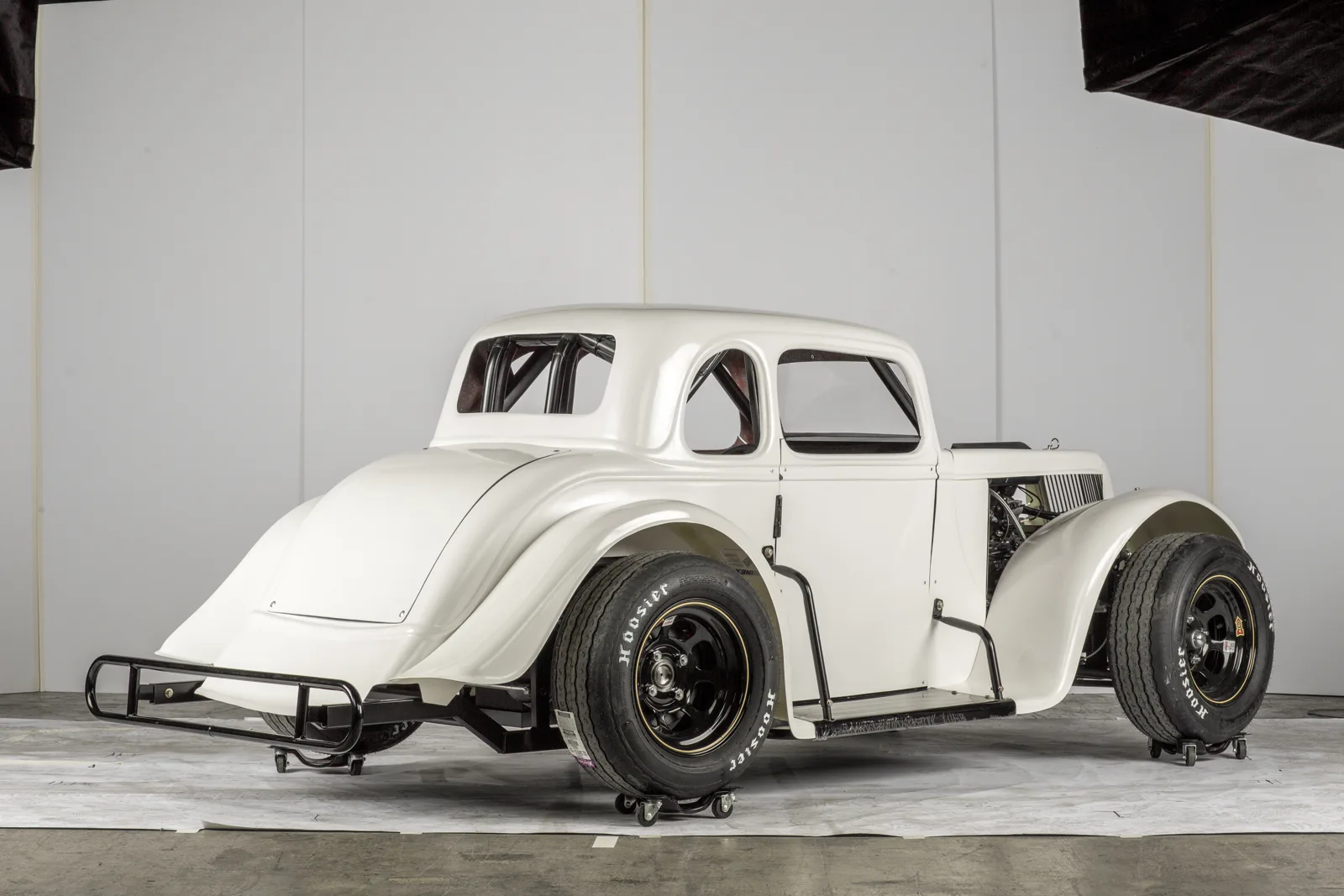
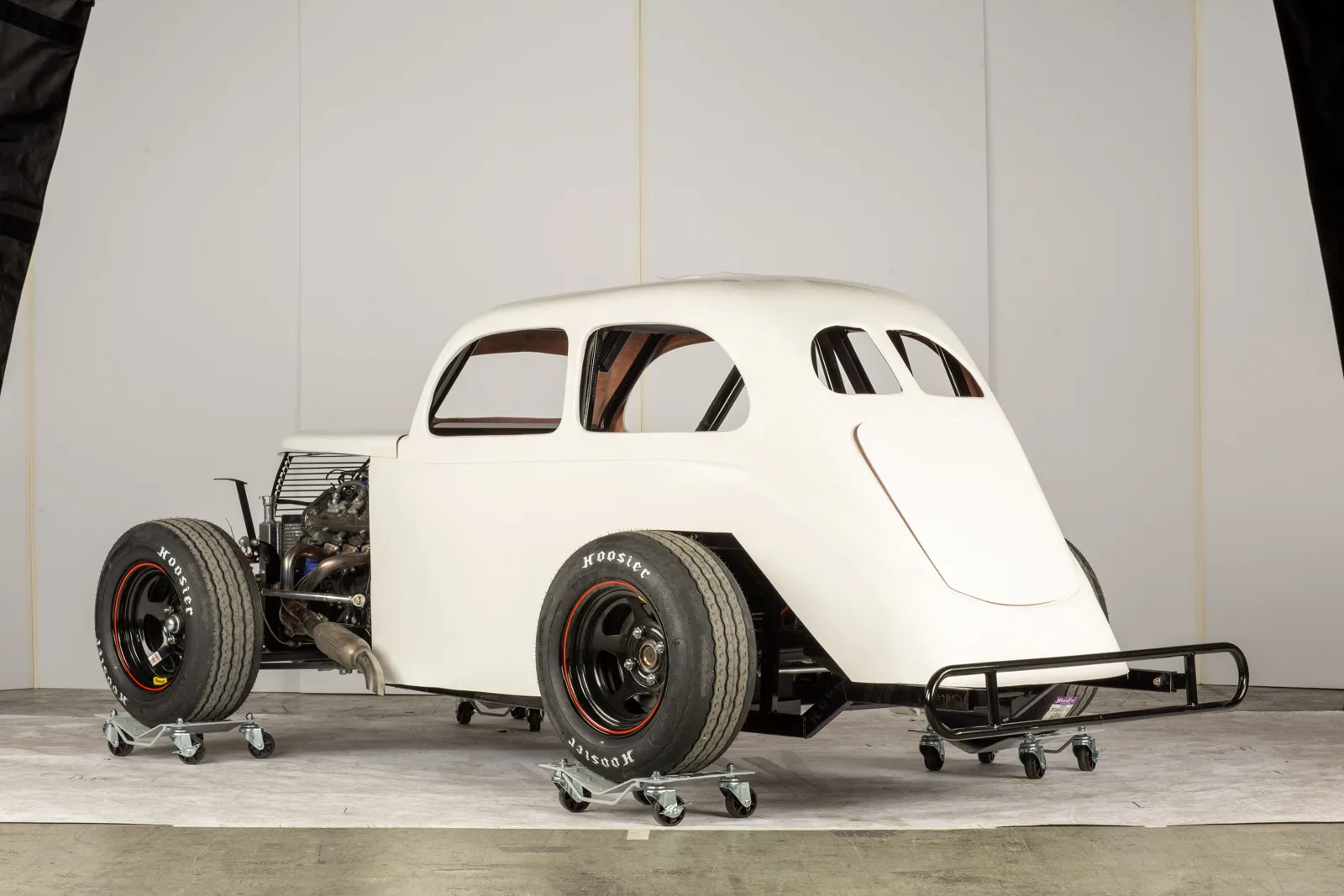
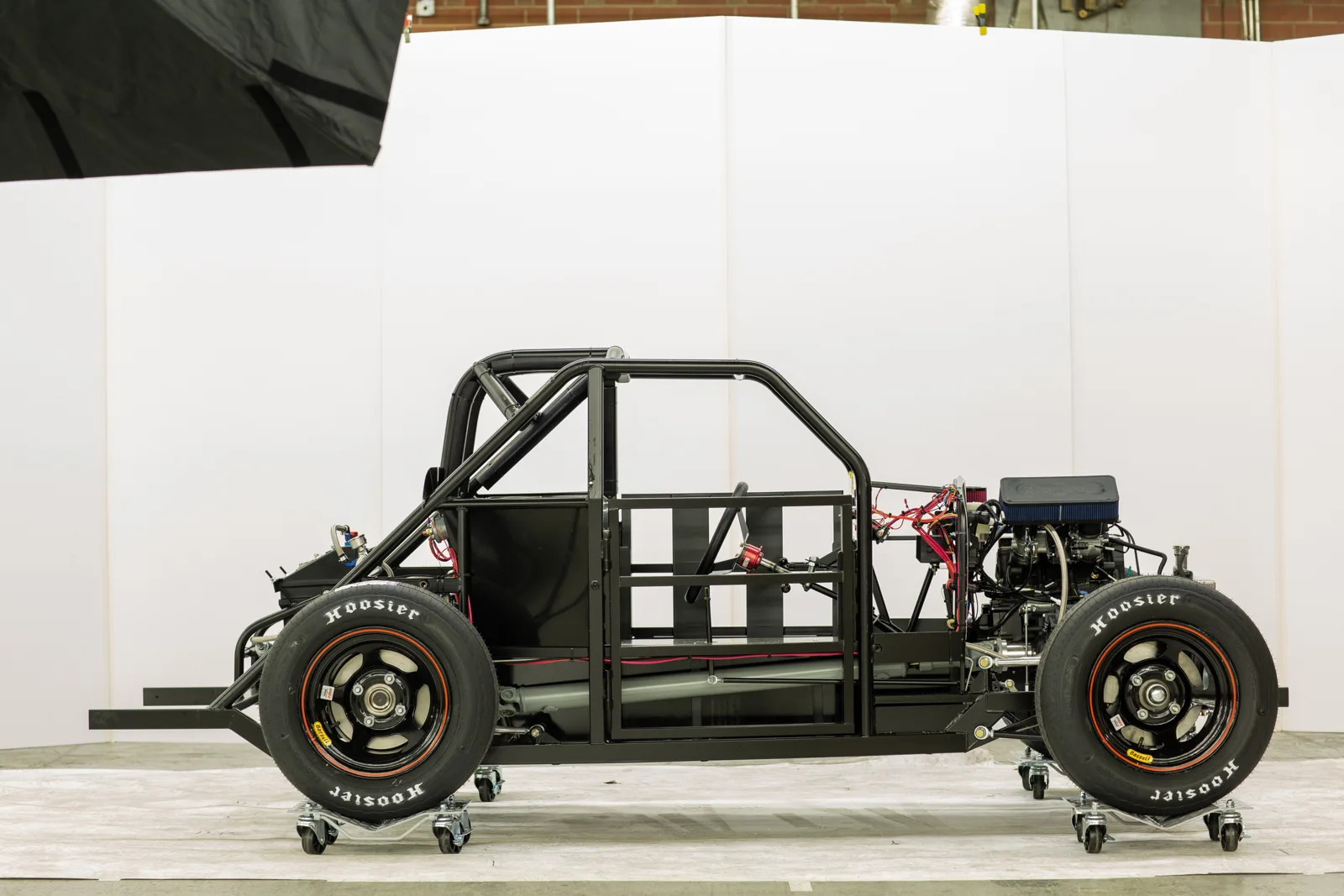
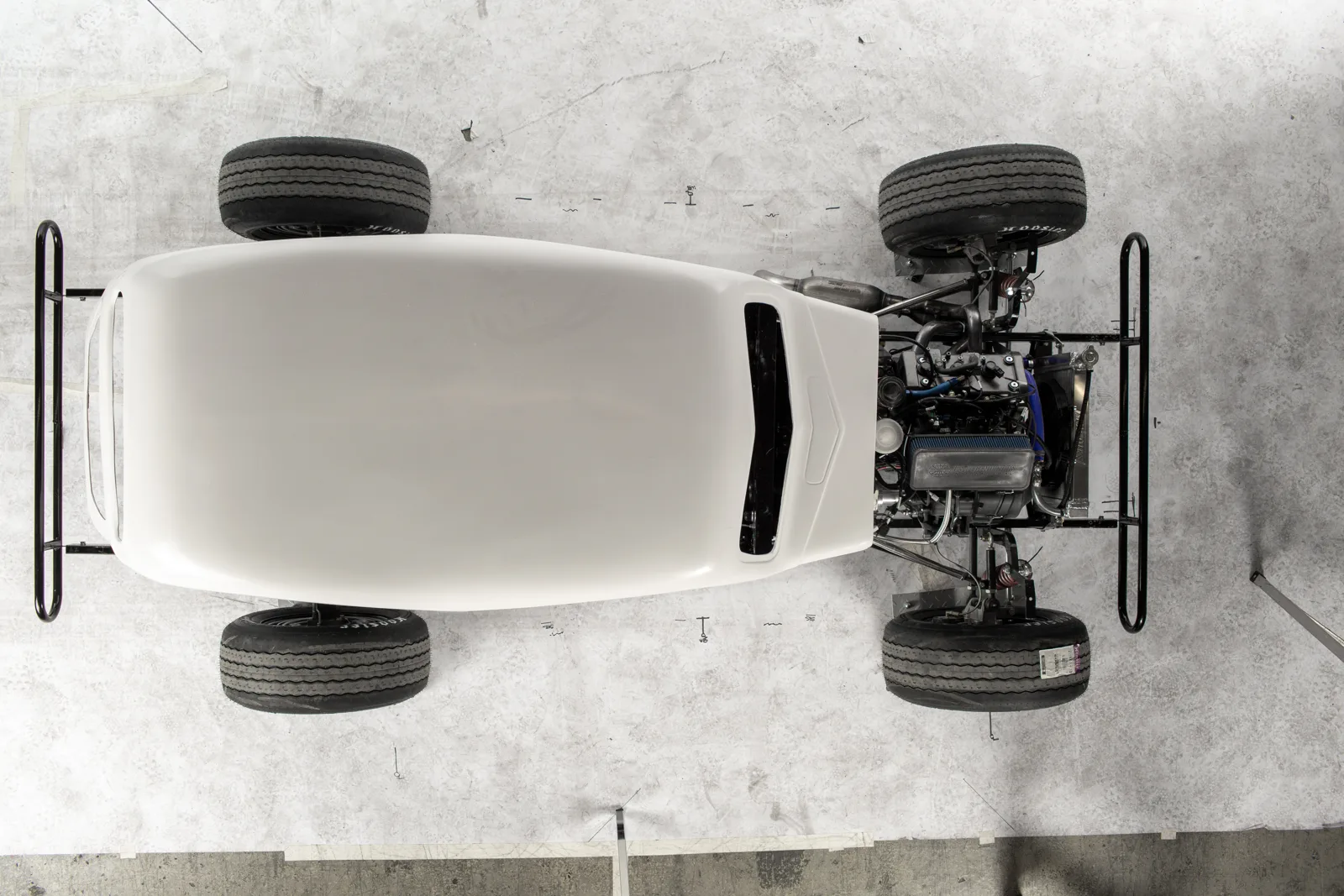
One frame, every car
A configurator only works if the parts are a system. So the order of the build mattered as much as the modeling.
Bandolero first
The only car on its own chassis, so it was finished start to end before anything else.
One master file
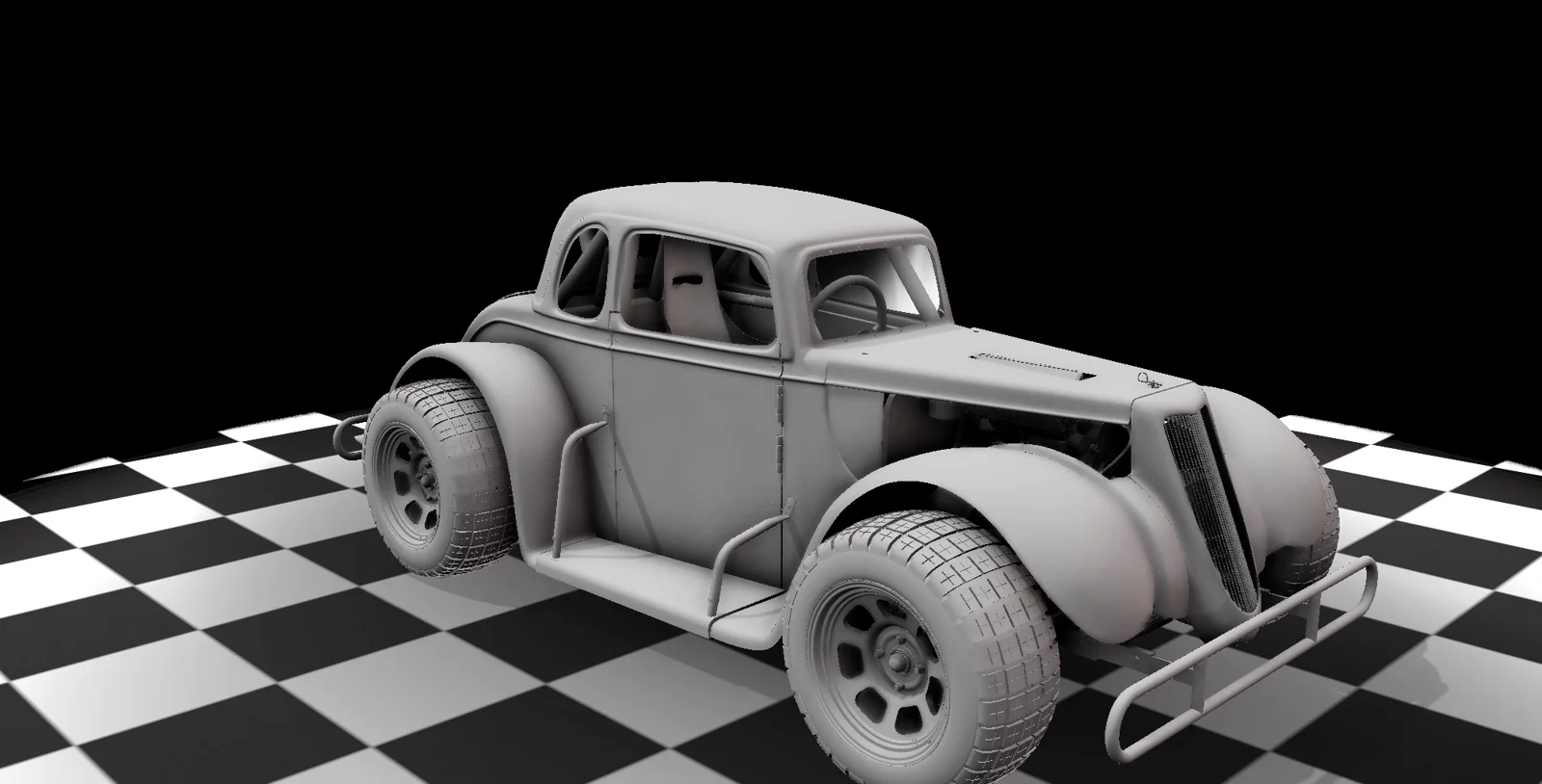
Every Legend Car rides on a coupe or sedan frame. The ’34 Ford coupe file became the master: chassis, cage and every body started there, through about 250 saved versions.
Parts that swap
Front ends and bodies share the same mounting points, so any approved front end drops onto any body with no adjustment.
Named and grouped
Body, front end, chassis, tires, rims and exhaust each live in their own group, which is what lets a website switch one without touching the rest.
Sculpted like clay, checked like paint
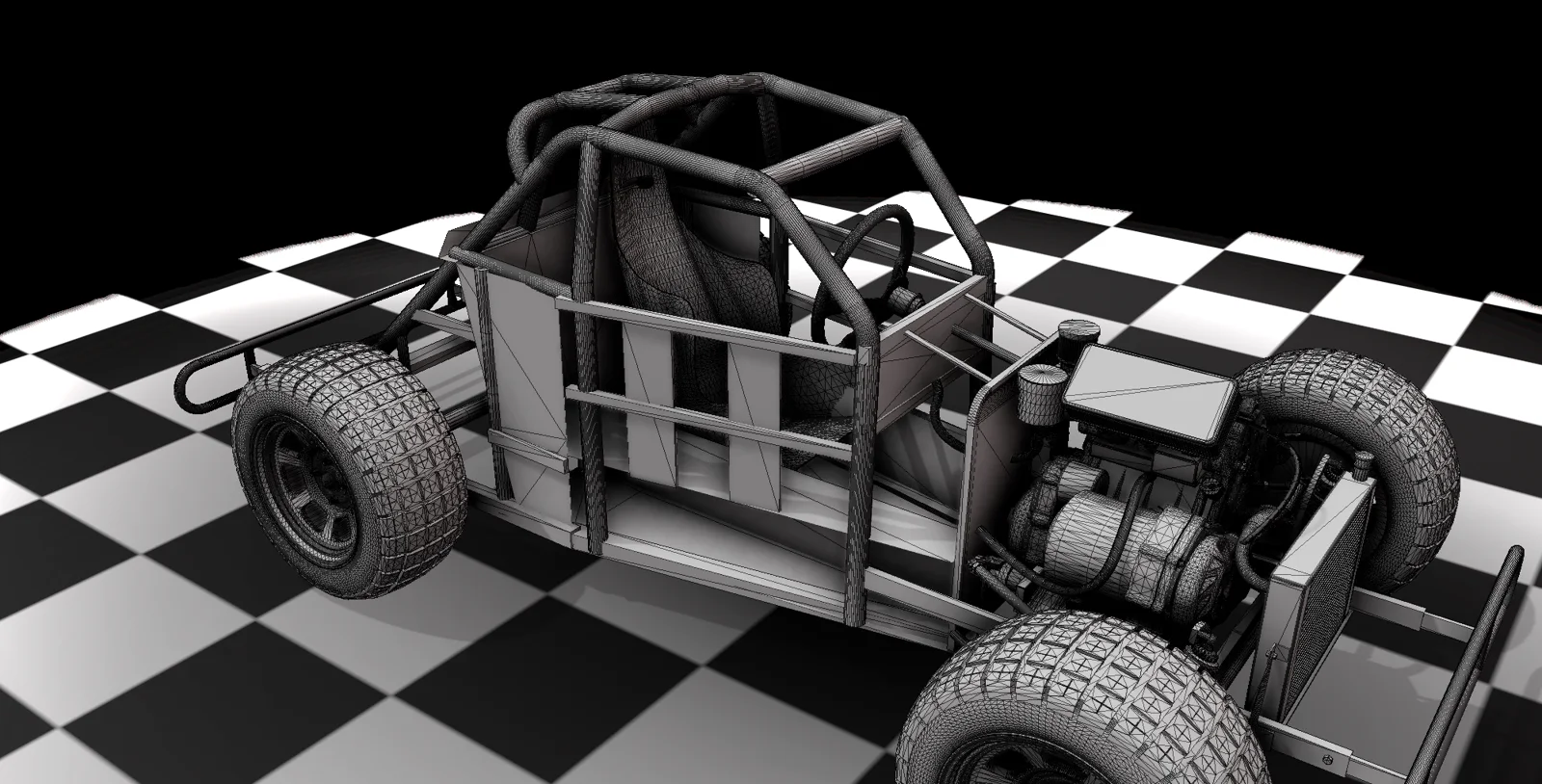
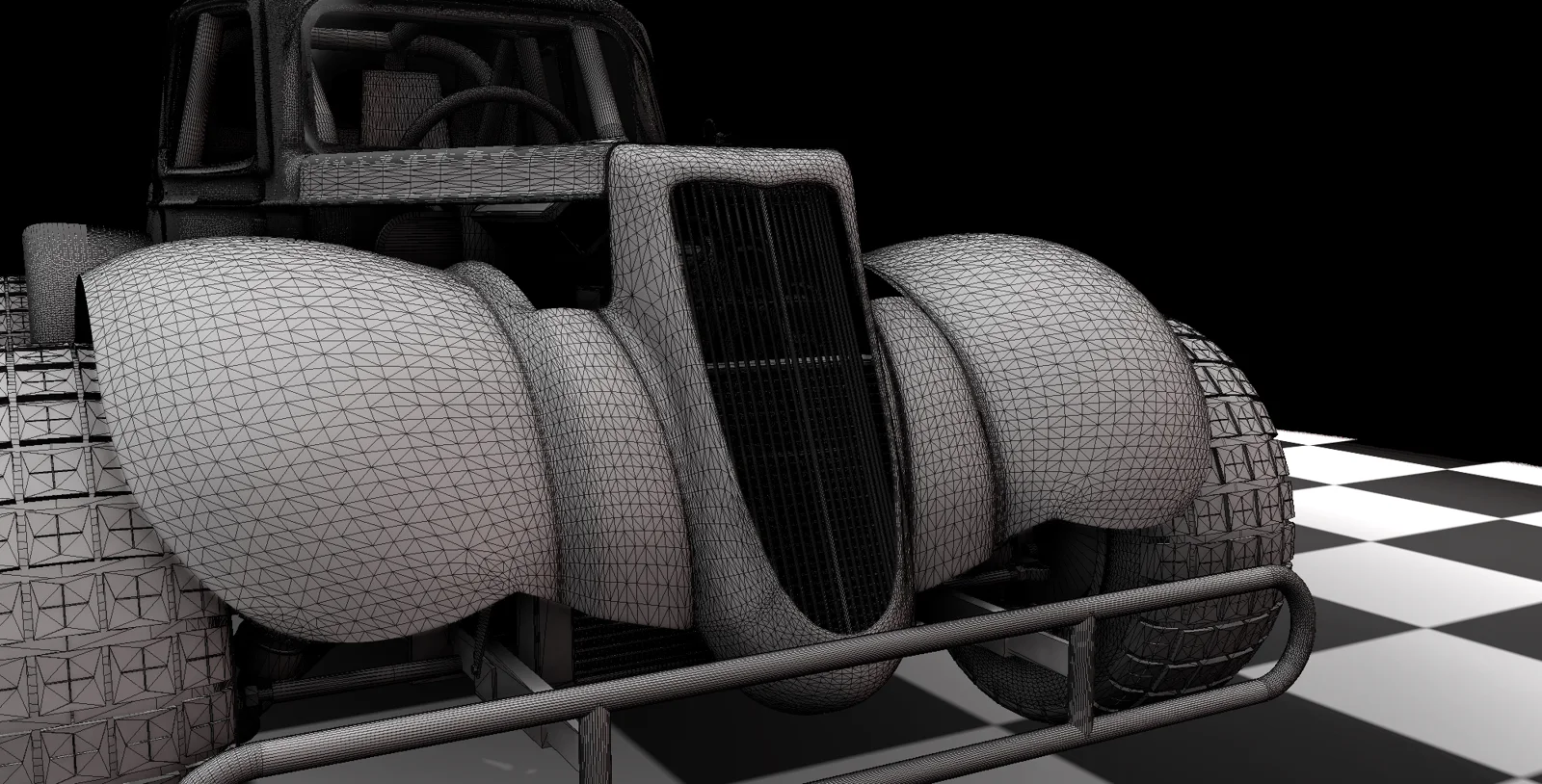
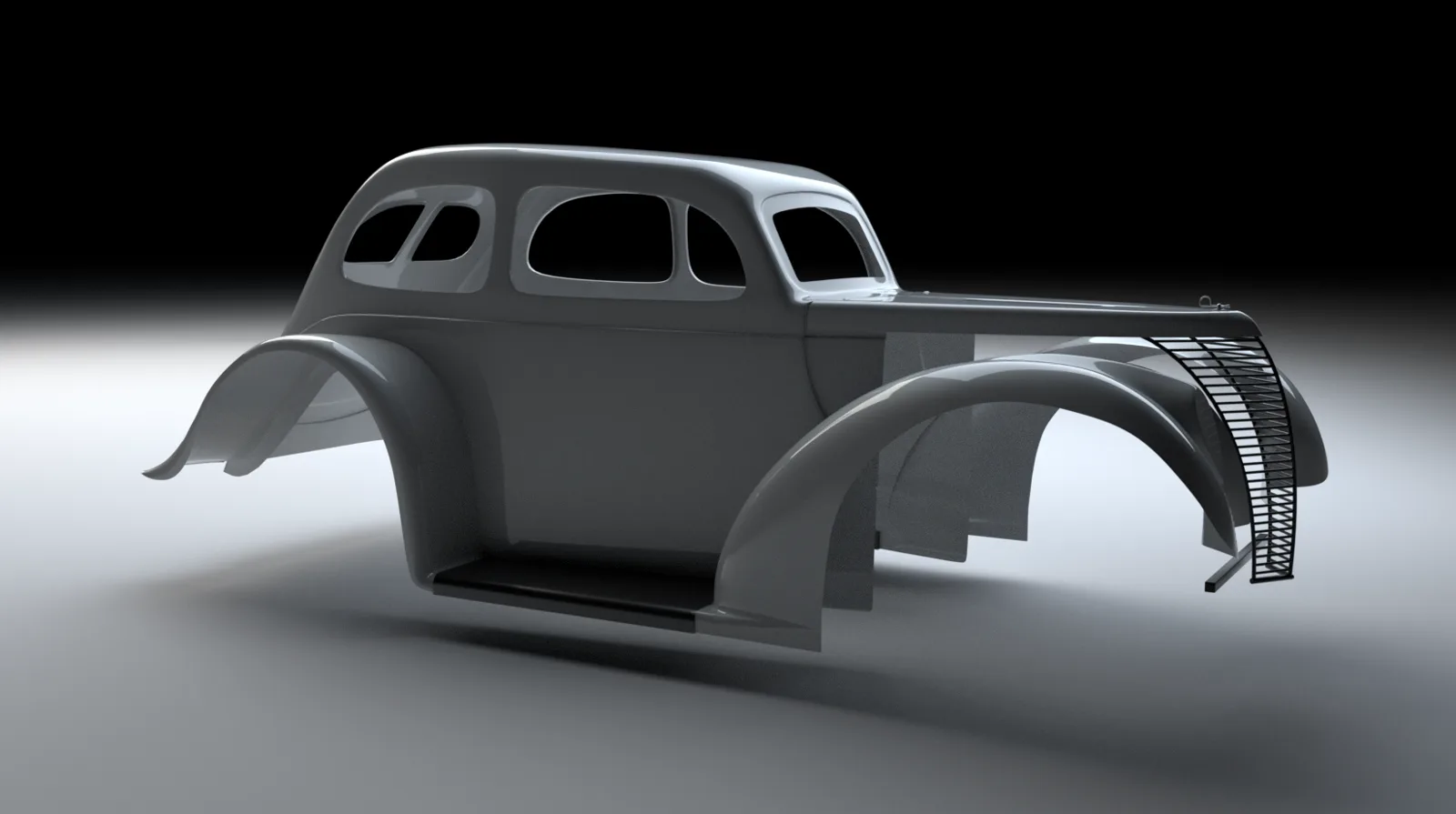
Nothing is modeled one square at a time. Every panel starts as a basic shape and gets worked down until it matches the car from every angle, not just the side.
Primitives to panels
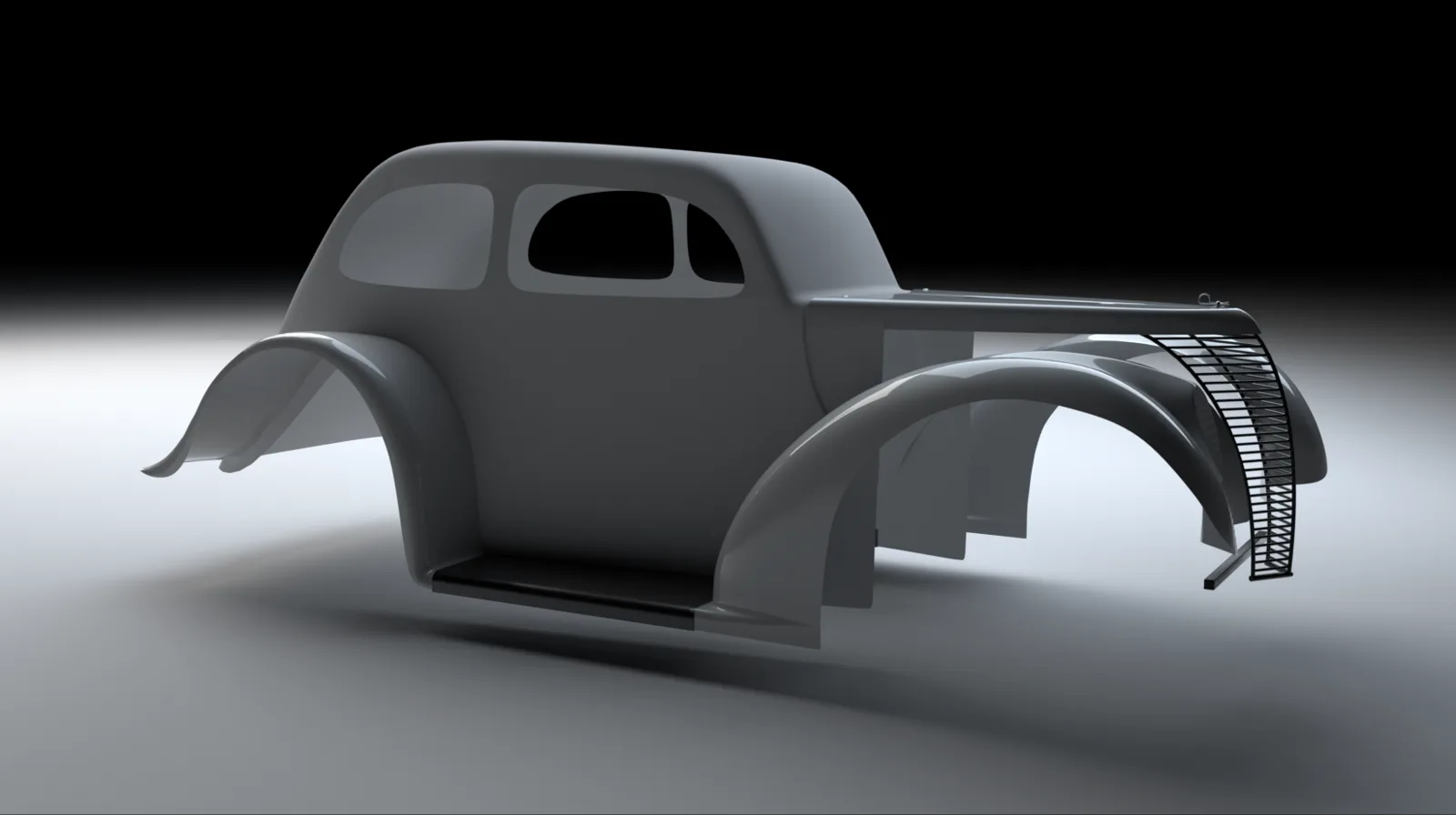
Boxes and cylinders pushed, pulled and cut, then smoothed with subdivision into soft fiberglass curves.
Mirrored
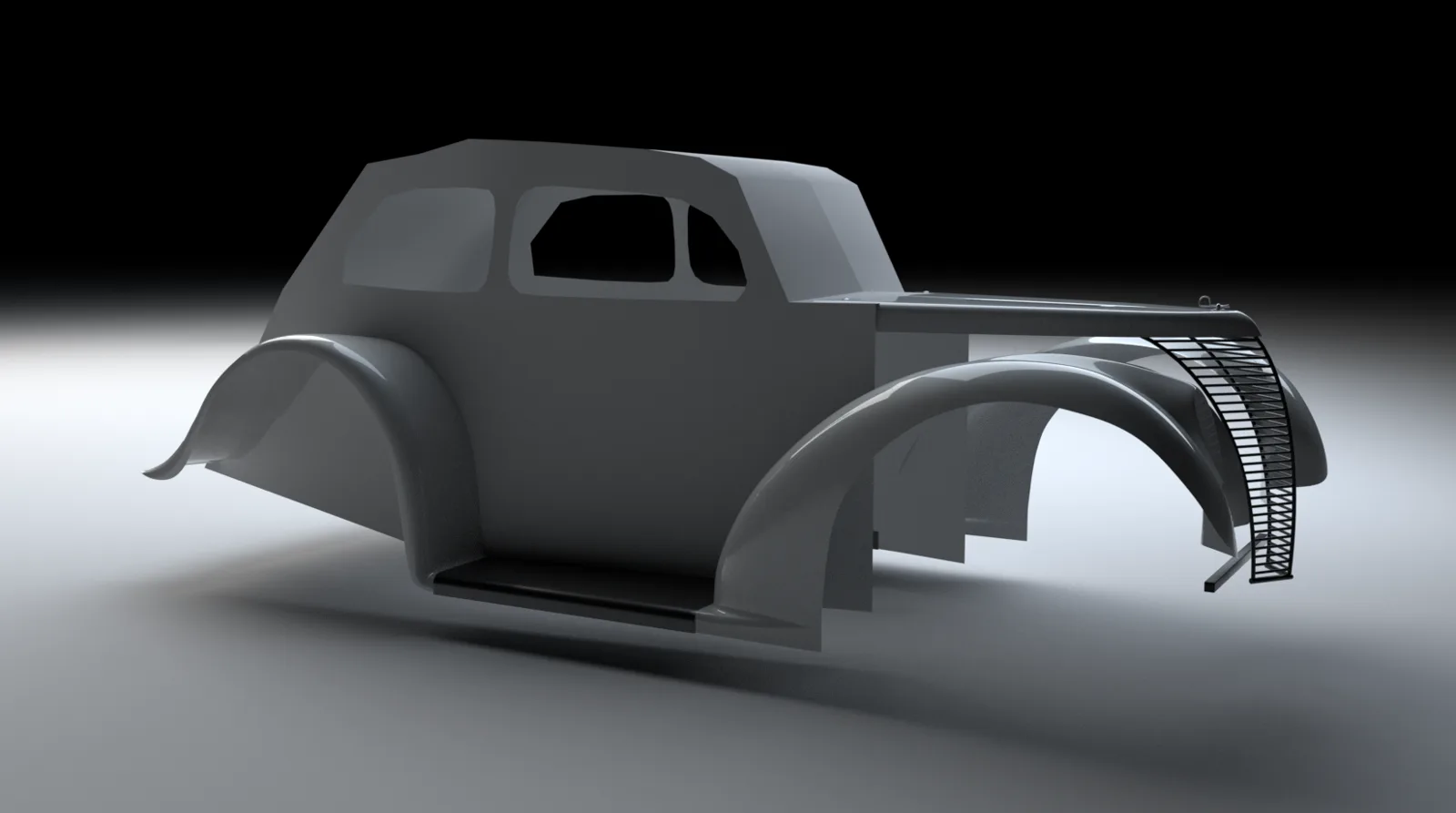
Half of each car is modeled and the other half mirrored live, so both sides match exactly and the center seam welds clean.
Checked in Octane
Realistic paint and lighting went on during modeling, because reflections expose a bad curve that a gray viewport hides. Every curve was checked from the top, side and 3/4.
The motor, pulled
Legend Cars run a sealed, stock Yamaha FZ-09. We bought a detailed FZ-09 bike model and pulled the engine the way a mechanic would, unchanged, because the real one is stock too.
The problem
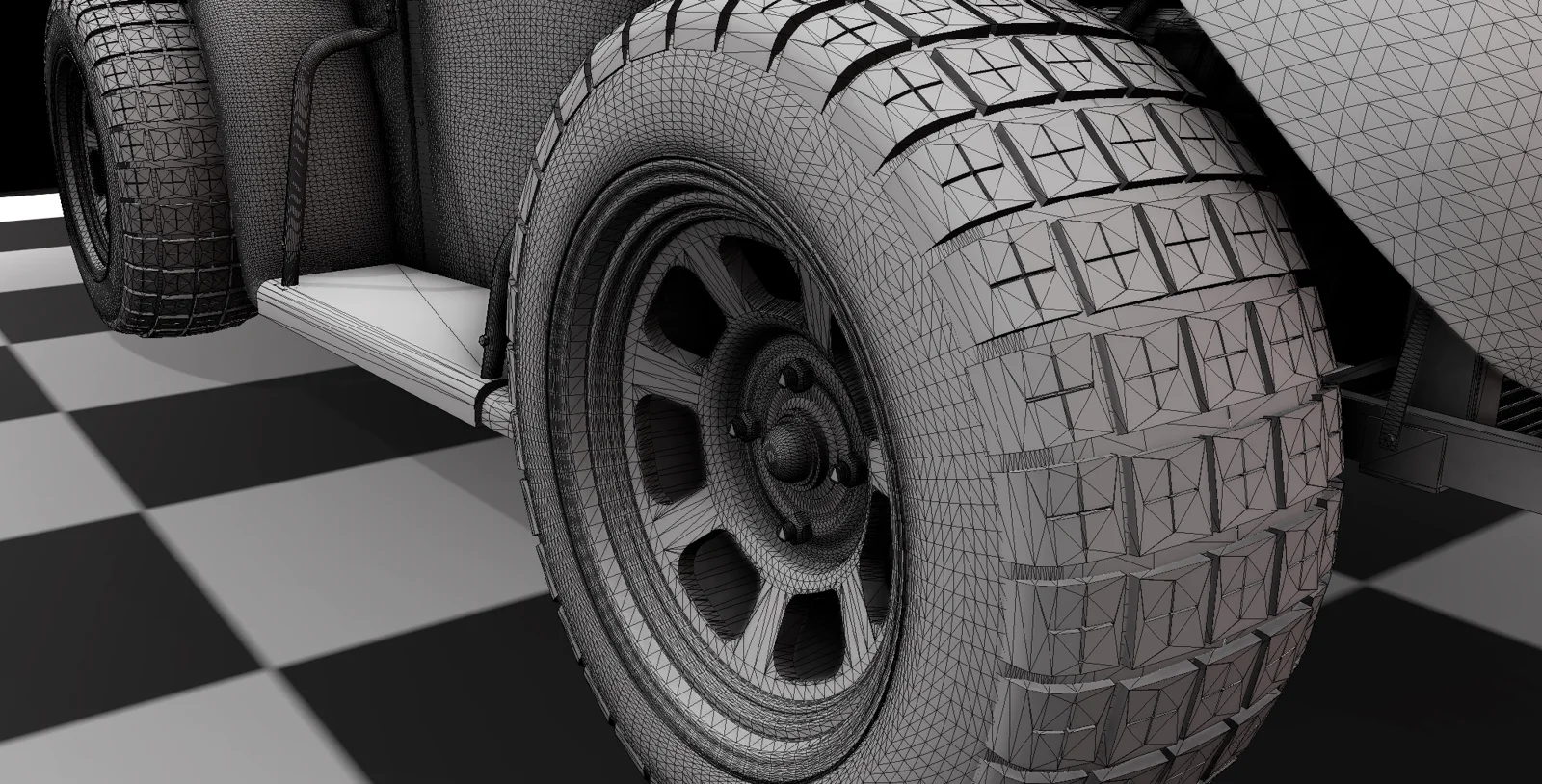
Tread starts as a smooth ring with the pattern wrapped around it and cut in with a boolean. The cut leaves long, thin triangles and points stacked too close together, which render as streaks and hard creases. Glossy body panels have the same problem anywhere geometry gets tight.
The fix
Every cut was cleaned by hand: stray points merged, edge loops rebuilt to follow the curve, smoothing angles set so hard edges stay hard and soft curves stay soft. The sidewall uses the UV layout and texture from a Hoosier tire model, so the lettering wraps correctly.
From 370 MB scenes to a browser
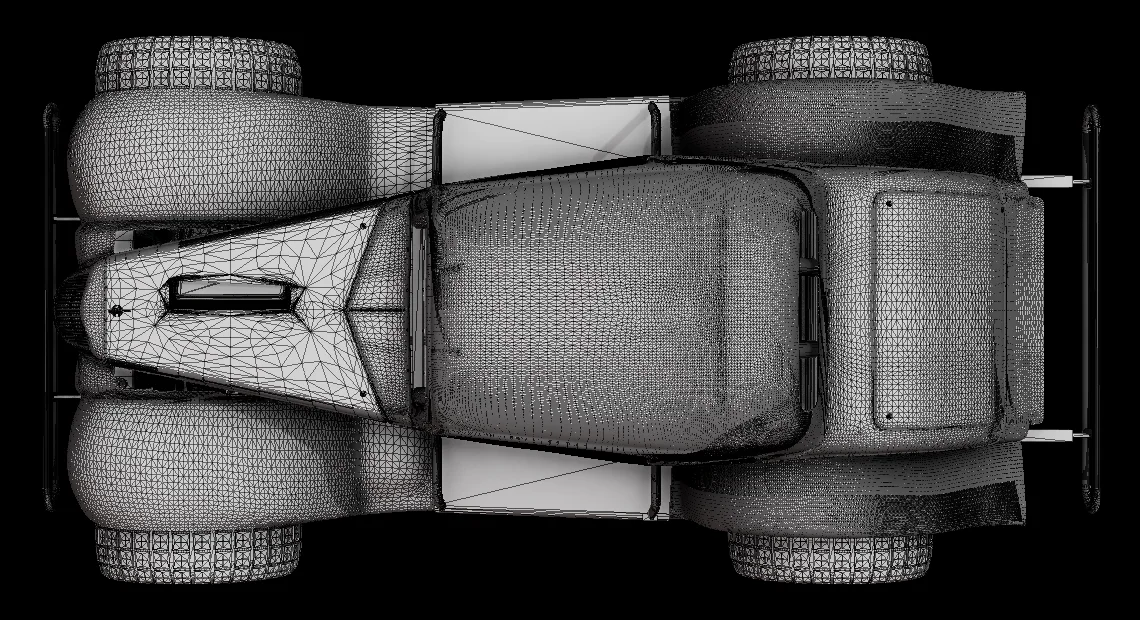
A finished car with cage, motor and every option runs past four million triangles, and the master scenes were 300 to 370 MB. The online builder had to load on a phone.
The problem
File size, polygon count and textures all fight each other, and the output limits were tight. Cut too much and the car looks cheap; keep too much and it won’t load.
The fix
The line was split into separate coupe, sedan and Bandolero files so buyers only load what they’re looking at. Then came export after export: ten passes in about half an hour on March 9, testing what each setting did, before the final coupe and sedan files shipped the next morning.
Live on uslegendcars.com
The models power the 3D Car Builder on Speedway Motorsports’ U.S. Legend Cars site: pick the Bandolero, a Legends coupe or sedan, choose a front end and paint, then Request a Build. The configurator at the top of this page shows the full range of parts we built for it.
Production notesFor 3D artists: tools, numbers and lessons
Toolchain
- Cinema 4D R25: modeling, layout, part system
- Octane: look development during modeling, to judge curvature and reflections
- GLTF: web export for the online builder
- i9-12900K, RTX 3080 Ti
Modeling toolbox (coupe file)
- 13 subdivision surfaces for the body panels
- 18 symmetry objects
- 23 booleans, each cleaned by hand
- 137 sweeps for cage, bars and hoses
- Cloners for grille slats and radiator fins
- Built from primitives: 178 cylinders, 70 cubes, 46 discs
Export log, March 9
| 1:30 PM, pass 2 | 112 MB |
| 1:40 PM, pass 5 | 225 MB |
| 1:43 PM, pass 7 | 16 MB |
| 1:44 PM, pass 8 | 15 MB |
| 2:02 PM, pass 10 | 112 MB |
Ten passes in 32 minutes. Final coupe and sedan files the next morning. 634 saved versions over the whole project.
Base assets, used honestly
- Motor: a purchased Yamaha FZ-09 model, engine pulled and used stock, as in the real car
- Tire sidewall: UV layout and texture from a Hoosier tire model
- Everything else, bodies, front ends, chassis, cage, rims and exhausts, modeled by hand
If we did it again
Get a car in the studio. A day with a tape measure would replace a lot of if-then math against warped lenses. For brand work with no CAD file, ask for physical access first, then photography shot on a long lens to keep distortion down.
Fortitude Creative
An in-house branding, marketing and production studio in Charlotte. The same team builds brands for operating businesses and 3D, animation and video for names like Lenovo, the Carolina Panthers and Novant Health. Everything is made under one roof.
Bring us this kind of problem
- A product that needs to exist in 3D, with or without a CAD file
- A configurator or 3D viewer for your website
- Product animation, explainers and launch videos
- 3D for an agency that needs a production partner
Have a product that needs to be built?
Tell us what you’re selling and what you have to start from: CAD files, photos, or just the real thing.
InquireRace and display photos from Wikimedia Commons, resized for the web. Photographers: BWard 1997, Corqe, Michael Barera, Vauxford. Licenses: CC BY 4.0, CC BY-SA 4.0, CC0. Production photos and renders: Fortitude Creative project files.